
Bringing a dog home can be exciting, but the first few days do not always look the way people imagine. Some dogs run around with confidence while others stay quiet, hide under furniture, or ignore their food bowl. That can leave new owners wondering if they have done something wrong.
In most cases, this is a normal part of settling in. The 3 3 3 rule for dogs offers a simple way to understand what many pets experience as they adjust to a new environment. It is not an exact schedule, but it helps explain why patience often matters more than perfection.
What Is the 3 3 3 Rule for Dogs
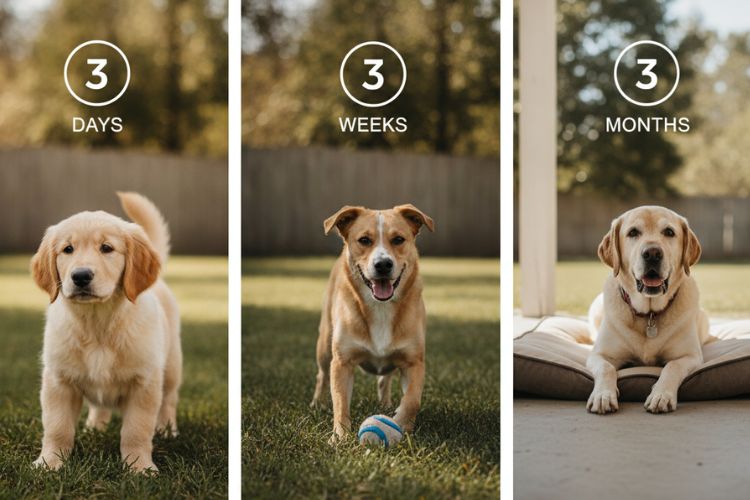
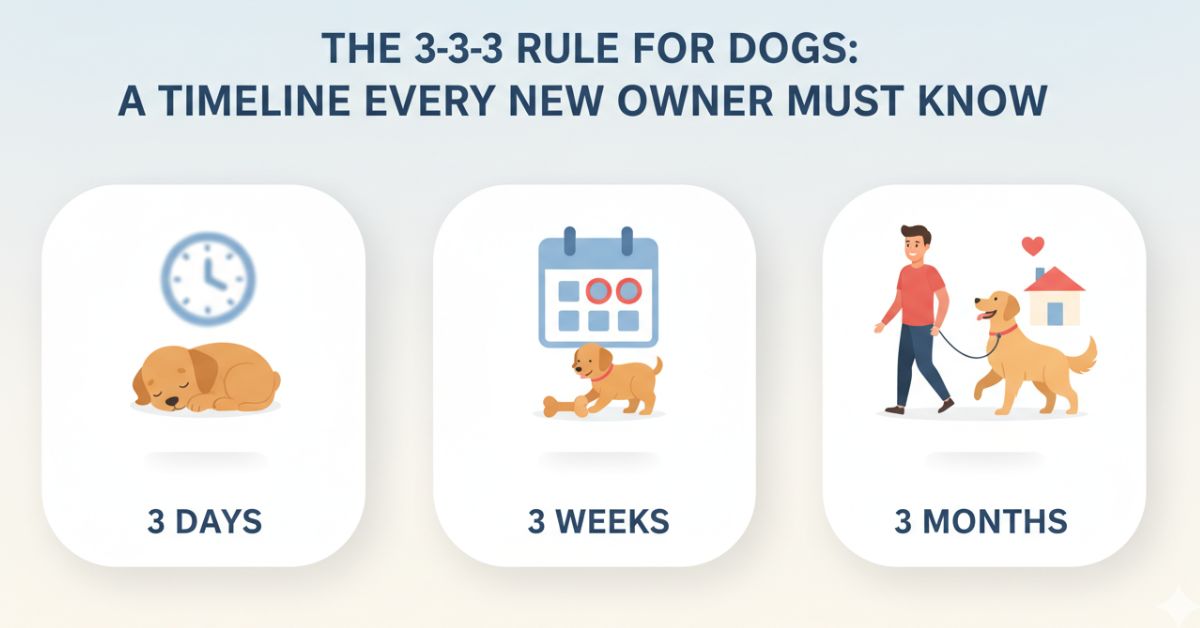
The 3 3 3 rule for dogs divides the adjustment process into three stages. The first three days are usually about recovering from the change. The next three weeks are when routines become familiar, and trust begins to grow. By around three months, many dogs start acting like they truly belong.
You may also hear it called the rule of three for dogs. It is especially useful for adopted pets because the rescue dog adjustment period can involve fear, confusion, and uncertainty. Even so, puppies and dogs coming from another home can benefit from the same approach.
Why This Timeline Helps
The new timeline for getting your dog accustomed helps you understand what you should expect from your puppy. Some dogs will adjust faster than others. Trying to compare your puppy to another dog does not help, as personalities are different.
The First 3 Days Your Dog Is Taking Everything In
The first stage of the 3 3 3 rule for dogs can feel slow. Your dog is surrounded by unfamiliar people, sounds, and smells. It makes sense if they spend more time watching than interacting.
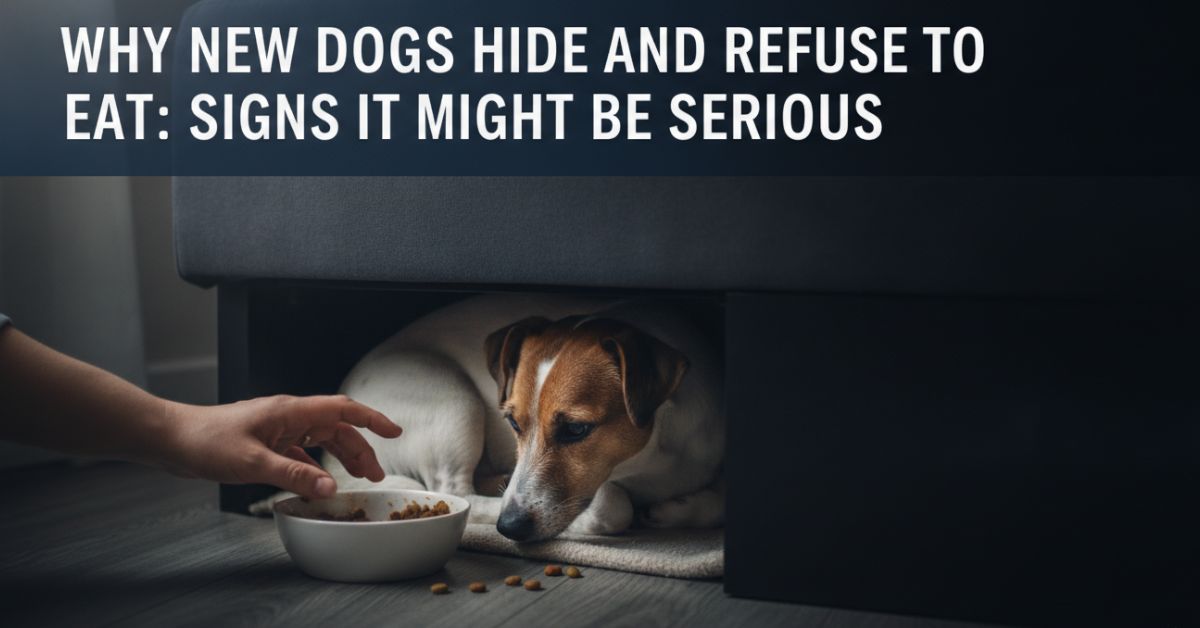
A shy dog may avoid eye contact, sleep more than expected, or seem uninterested in toys. It is also common to see a dog refusing food during this period. Stress alone can temporarily affect appetite.
How You Can Help
Keep life simple during these first days. Give your dog a quiet place to rest, stick to regular meal times, and avoid inviting a crowd of visitors.
If you notice your dog is avoiding food for several days or showing signs of illness, schedule a dog routine checkup with your veterinarian. A professional exam can rule out health issues while giving you peace of mind.
The First 3 Weeks Trust Begins to Grow
Things often change little by little after the first week. Your dog may greet you at the door, explore more rooms, or become interested in walks and games. These small moments show that trust is starting to develop.
This new dog adaptation timetable will not consist of any immediate changes, but rather a process of gradual improvement, which will make your pet comfortable.
Small Habits Make a Big Difference
Feed your dog around the same time each day. Take regular walks and introduce simple commands like sit or come. Short positive sessions are usually more effective than long training exercises.
You may also notice some of the new dog behavior stages becoming more obvious. A quiet dog might suddenly become playful while another starts testing boundaries by chewing shoes or barking at unfamiliar noises. These changes are often part of learning the household rules.
The First 3 Months Your Dog Starts Feeling at Home
By the three-month mark, many dogs become much more comfortable in their surroundings. They recognize family members, understand daily routines, and feel safe enough to show their true personality.
The 3 3 3 rule for dogs suggests this is when long-term bonds become stronger. Your dog may seek affection more often, relax during naps, or confidently explore places that once seemed intimidating.
Not every pet follows the same pace. Some rescue animals need longer because their rescue dog adjustment period is shaped by experiences you may never fully know.
Why Some Dogs Settle Faster Than Others?
No two dogs have the same story, so it is unrealistic to expect them to follow the exact same timeline. Age, breed, personality, health, and past experiences all affect how quickly a dog feels comfortable in a new home. A puppy that has always lived in a caring environment may settle in within a few days, while an adult dog that has been rehomed several times might need much longer to feel secure.
And that is just one of many reasons why the rule of three when it comes to dogs should be considered more of a recommendation rather than an exact schedule. There will be some pets who go right along with the flow, while others may take a bit more time. And there is always going to be stress when you try to force anything or compare one pet to another.
Common Mistakes New Owners Make
Many people expect instant affection, but relationships take time. Forcing interaction, changing routines every day, or introducing too many guests too soon can overwhelm a nervous dog.
It is also easy to mistake temporary stress for lasting dog behavior problems. Before assuming your dog has a serious issue, consider whether they are still adjusting to a brand-new environment.
Calm consistency usually works better than punishment. Reward the behaviors you want to encourage and give your dog space when they need it.
Signs Your Dog Is Adjusting Well
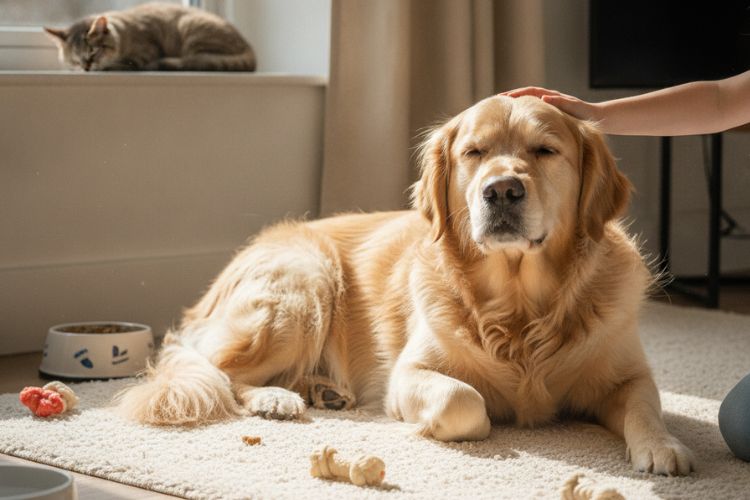
The most significant differences may be those that go almost unnoticed initially. A dog who used to hide can suddenly come with you to the kitchen or relax by your side while watching television. They could wag their tail when greeting you, take an interest in their toys once more, or feel safe enough to rest where they can be seen.
Over time, everyday habits become more predictable. Meals are finished without hesitation, walks become more enjoyable, and your dog starts looking to you for comfort or direction. These small milestones are part of the new dog behavior stages and usually show that your pet is beginning to feel secure and confident in their new surroundings.
When Should You Ask for Help?
Not every challenge will disappear on its own, and that is okay. If weeks have passed and your dog still seems terrified, refuses to interact, or reacts aggressively to normal situations, it may be time to get professional advice. The same applies if they continue avoiding meals or seem unusually withdrawn.
A veterinarian or experienced trainer can help determine whether the behavior is linked to stress, a medical condition, or something else that needs attention. Getting support early can prevent small concerns from becoming bigger issues and make the transition easier for both you and your dog.
Final Thoughts
Building trust with a new dog takes time, and there is no perfect schedule that fits every pet. Some settle in quickly, while others need extra patience before they feel completely comfortable. What matters most is giving them a stable routine, plenty of reassurance, and the freedom to adjust at their own pace.
The 3 3 3 rule for dogs is a useful reminder that lasting bonds are built gradually. Keep showing up with consistency and understanding, and before long, the dog that once seemed unsure may start acting as if they have always belonged in your home.
FAQs
Does the 3 3 3 rule work for every dog
No. The 3 3 3 rule for dogs is a helpful guideline, but every pet adjusts at its own pace.
Is the rule of three only for rescue dogs?
No. While the rule of three for dogs is often discussed for adopted pets, it can also help owners understand the transition for puppies and dogs moving from another home.
Should I worry if my dog hides during the first week
Not necessarily. Many dogs stay quiet or cautious while they learn that their new surroundings are safe.
How long is the rescue dog adjustment period
The rescue dog adjustment period varies widely. Some dogs settle within weeks, while others need several months before they feel fully secure.
What if my dog seems happy from day one
Some dogs adapt quickly and show confidence almost immediately. That does not mean the adjustment process is complete, so maintaining a steady routine is still important.