
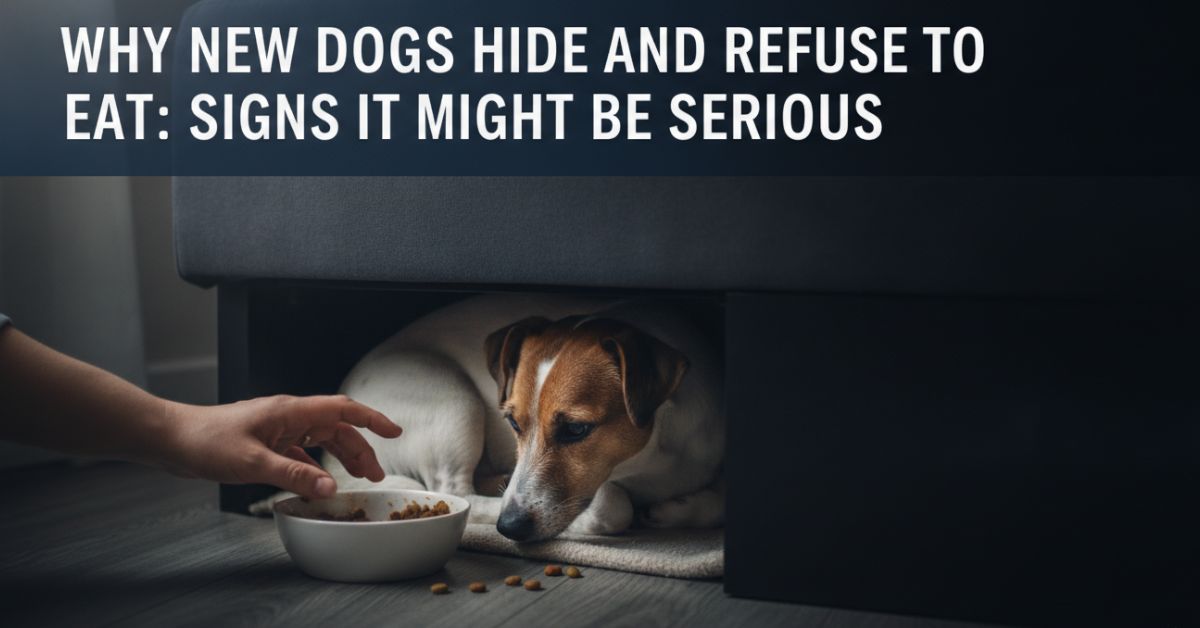
The first night with a new dog can be very different from what you imagined. Instead of exploring the house or wagging their tail, they may slip under the table, stay silent, and ignore their dinner completely. For many owners, that moment brings more questions than answers.
A new dog not eating does not always mean there is a serious problem. Many dogs need time before they feel safe enough to relax or enjoy a meal. Still, if you notice a dog hiding and won’t eat behavior that continues without improvement or is paired with other concerning signs, it should not be dismissed. Paying attention to those early clues can make all the difference.
What It Means When a New Dog Hides Instead of Eating?
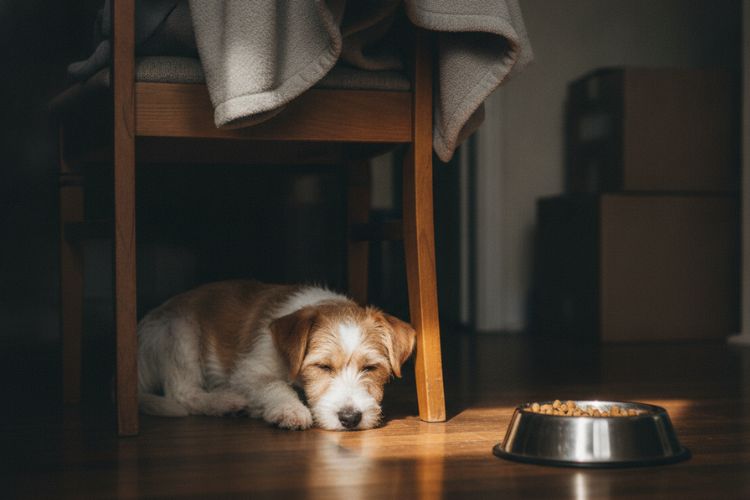
Moving into a new home is a major change for any dog. They have left behind everything that felt familiar and are suddenly surrounded by different smells, voices, and expectations. Even a confident pet can become cautious during this transition.
It is not unusual to see a new dog not eating during the first day or two. Some dogs also avoid eye contact, sleep more than usual, or spend hours tucked away in a quiet corner. This type of new dog hiding behavior is often their way of coping with stress rather than a sign that they dislike their new family.
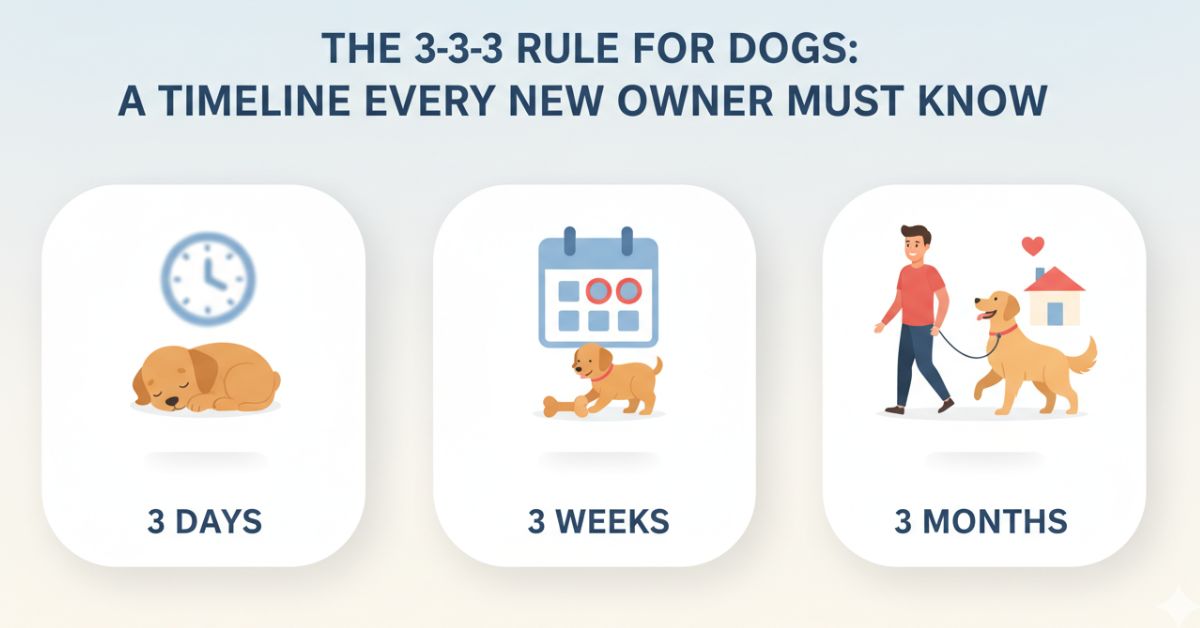
If you have recently adopted a rescue pet, learning about the 3 3 3 rule for dogs can provide helpful context. It explains why many dogs need days or even weeks before they begin to relax and show their true personality.
Other Factors That Can Affect Appetite and Behavior
Stress is only one possible explanation. A long car ride may leave a dog feeling nauseated, making them less interested in food. Some pets are also grieving the loss of a previous owner or struggling after being separated from littermates.
Medical problems can produce similar symptoms. Dental pain, stomach upset, infections, or other illnesses may lead to a dog refusing food while also causing them to hide. That is why it is important to watch for changes over time instead of judging the situation from a single meal.
Signs It Might Be Serious
A shy dog that slowly becomes more comfortable is very different from one whose condition keeps getting worse. Looking at the overall picture often tells you more than focusing on one missed meal.
Many owners worry when they notice a new dog not eating, but gradual improvement is usually a reassuring sign. On the other hand, if your dog is hiding and won’t eat for an extended period with no signs of progress, it deserves closer attention.
Red Flags You Should Not Ignore
Persistent vomiting, diarrhea, trouble breathing, or severe weakness should never be dismissed as simple adjustment issues. The same applies if you notice dehydration, ongoing shaking, or obvious pain when your dog moves.
Another warning sign is a prolonged dog refusing food, combined with complete withdrawal from people and activities. These symptoms may point to illness rather than stress and should be evaluated by a veterinarian as soon as possible.
How to Help a New Dog Feel Safe and Comfortable?
The first few days can shape how your dog feels about their new home. Instead of trying to do too much at once, focus on creating a calm and predictable environment that allows them to settle in at their own pace.
- Give them a quiet place to rest. Set up a comfortable area where they can relax without constant noise or interruptions.
- Keep food and water available on a regular schedule. If you have a new dog not eating, avoid switching foods repeatedly or offering endless treats in an effort to encourage them.
- Let your dog approach you first. Sitting nearby and allowing them to make the first move often builds trust faster than forcing interaction.
- Avoid overwhelming them with visitors or new experiences. Too much excitement in the beginning can increase stress and make adjustment more difficult.
- Stick to a consistent daily routine. Feeding, walks, and bathroom breaks at similar times each day help your dog understand what to expect and feel more secure.
- Be patient with shy behavior. Many dogs showing new dog hiding behavior become more confident once they realize they are safe and there is no pressure to interact before they are ready.
When to Contact a Veterinarian
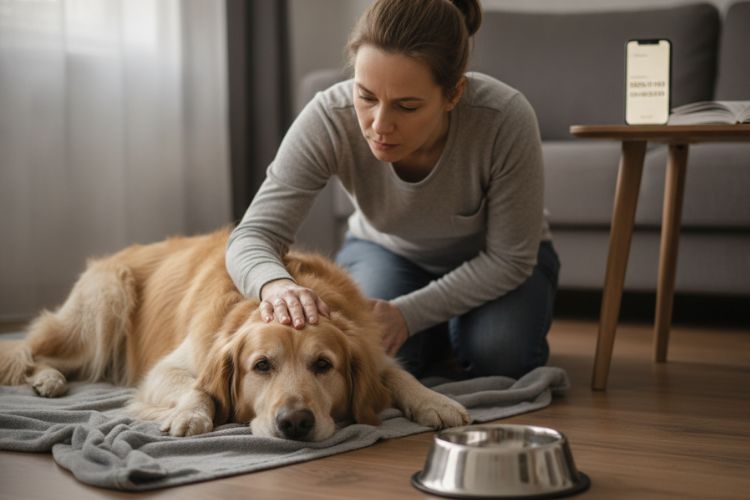
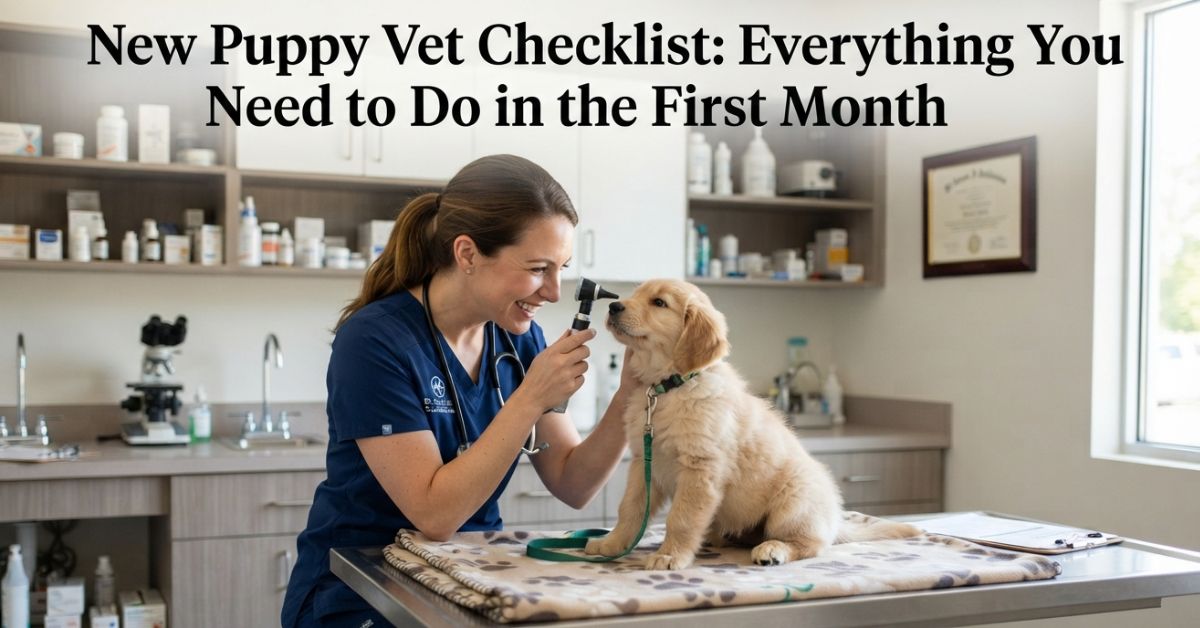
Some patience is normal, but there is a point where waiting is no longer the best choice. If your new dog is not eating for more than a couple of days or your pet refuses water, it is worth getting professional advice.
You should also arrange an examination if your dog is hiding and won’t eat while showing other symptoms such as vomiting, diarrhea, difficulty breathing, extreme tiredness, or signs of pain. Puppies, senior dogs, and pets with existing medical conditions should be evaluated even sooner because they can become dehydrated more quickly.
Not every problem is physical. Sometimes fear and anxiety can develop into longer-term behavioral issues in dogs that benefit from early guidance. A veterinarian or qualified trainer can help you understand what is normal and what may need additional support.
Last Words
The first few days with a new pet can be full of uncertainty, and it is easy to assume the worst when they stay hidden or ignore their food bowl. In many cases, these behaviors are simply part of adjusting to a completely different environment.
Watch for gradual progress instead of expecting overnight change. A dog that starts exploring the house, accepts treats, or greets you at the door is moving in the right direction. With patience, a steady routine, and timely medical care when needed, most dogs become more comfortable and confident as they learn that they are finally home.
Frequently Asked Questions
How long is it normal for a new dog not to eat?
A new dog not eating for the first day or so is fairly common because stress can reduce appetite. If your dog continues skipping meals or seems unwell, contact your veterinarian.
Why is my new dog hiding all day?
Many dogs retreat to quiet places while they adjust to unfamiliar surroundings. This type of new dog hiding behavior often improves as they begin feeling secure.
Should I force my dog to come out of hiding?
No. Give your dog space and allow them to approach you when they are ready. Forcing interaction can increase fear and make settling in take longer.
Can stress alone cause a dog to refuse food?
Yes. Anxiety from moving homes or leaving familiar people behind can lead to temporary appetite loss. However, a persistent dog refusing food should always be monitored closely.
When should I worry if my dog is hiding and will not eat?
If your dog is hiding and won’t eat for an extended period or develops symptoms such as vomiting, weakness, dehydration, or trouble breathing, seek veterinary care without delay.