

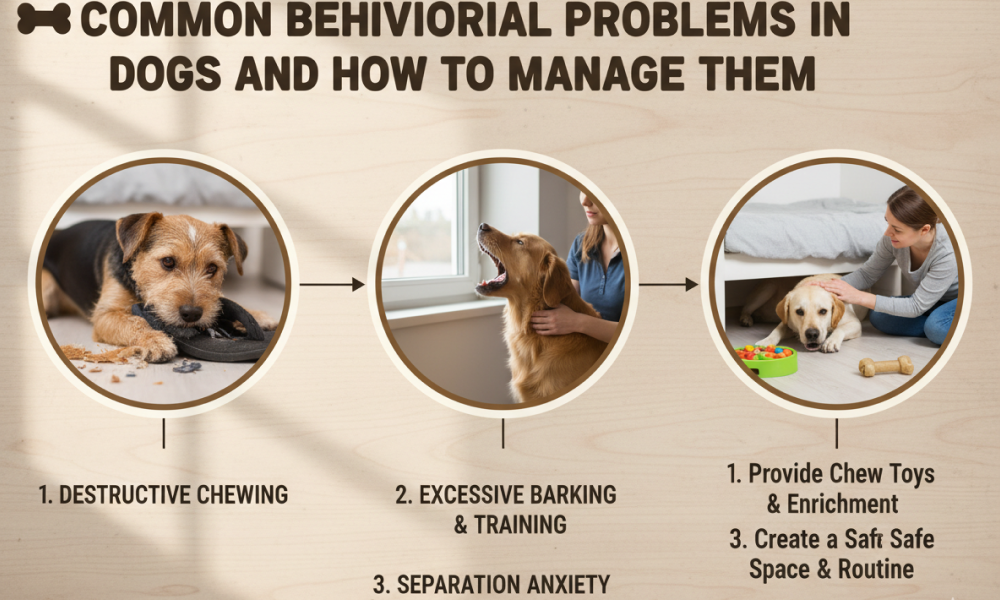
Dogs are known for their loyalty, affection, and companionship, but just like humans, they can develop certain habits that are difficult to manage. Many pet owners feel confused or frustrated when their dog starts behaving differently, especially if they do not understand the reason behind it. In most cases, these dog behavior problems are not random. They are often a result of unmet needs, lack of training, or changes in the environment.
Understanding your dog’s behavior is the first step toward building a strong and healthy relationship. Instead of seeing these actions as disobedience, it is more helpful to view them as signals. When addressed early, most behavioral issues in dogs can be managed effectively with patience, consistency, and the right approach.
Why Do Dogs Develop Behavioral Problems?
Dogs rely heavily on routine, structure, and interaction. When any of these are missing, they may begin to show signs of discomfort or stress. One of the most common causes of dog behavior problems is a lack of proper training, where dogs are not clearly guided on what is expected from them in daily life.
Another major reason is boredom and lack of stimulation. Dogs need both physical and mental activity to stay balanced. Sudden changes in environment, fear, or even health-related concerns like Dog vomiting and diarrhea can also affect their behavior. These factors often lead to confusion, anxiety, and unwanted habits if not addressed properly.

Common Behavioral Problems in Dogs
Dogs can develop a variety of habits that may seem challenging for owners. Recognizing these early helps in applying the right dog behavior problems and solutions before they become serious.
- Excessive Barking
Barking is a natural way for dogs to communicate, but when it becomes constant, it can be difficult to manage. This type of abnormal dog behavior is often caused by boredom, loneliness, or a need for attention. Identifying the trigger helps in controlling it effectively. - Aggression
Aggression is one of the more serious behavioral issues in dogs and should be handled carefully. It may be directed toward people, other animals, or food. Fear, lack of socialization, or past experiences are common reasons behind such bad behavior in dogs. - Separation Anxiety
Some dogs feel uneasy or stressed when they are left alone for too long. They may bark a lot, scratch things, or act restless around the house. This is not just bad behavior in dogs, but a sign that your dog is feeling anxious and needs comfort and support. - Destructive Behavior
Chewing furniture, digging, or tearing things apart are common dog behavior problems seen in dogs that are bored or anxious. These actions usually indicate that the dog is not getting enough activity or stimulation. - Jumping on People
Jumping is often a sign of excitement or a way for dogs to seek attention. While it may seem harmless, it can become problematic if not controlled early, especially with larger dogs. - Pulling on the Leash
Dogs that pull during walks are usually not trained properly or are overly excited. This abnormal dog behavior can make walks stressful and less enjoyable for both the owner and the pet. - House Training Issues
If your dog keeps having accidents inside the house, it usually means the training is not complete yet or the routine is not consistent. These dog behavior problems can be improved with patience, regular practice, and clear guidance so your dog understands where and when to go.
How to Manage Dog Behavioral Problems
Managing behavior takes effort, consistency, and understanding. There is no instant solution, but with the right steps, improvement is always possible.
- Start with Basic Training
The first step to improving your dog’s behavior is building a strong training base. Simple commands like sit, stay, and come help your dog understand what you want from them. When dogs receive clear and consistent direction, they feel more secure and are less likely to pick up unwanted habits. - Provide Enough Exercise
Regular physical activity helps dogs release energy and stay calm. A well-exercised dog is less likely to develop behavioral issues in dogs, such as aggression or destructive habits. - Use Positive Reinforcement
Rewarding good behavior encourages dogs to repeat it. This method is more effective than punishment and helps build trust between the dog and the owner. - Create a Consistent Routine
Dogs feel more comfortable when their day follows a regular pattern. Feeding, walks, and rest at the same time each day help them know what to expect. This sense of structure keeps them calm and gradually improves their behavior. - Provide Mental Stimulation
Keeping your dog mentally active is just as important as physical exercise. Simple activities like interactive toys, small training sessions, or games can keep their mind busy. When dogs stay engaged, they are less likely to get bored or develop unwanted habits. - Pay Attention to Health Signals
Sometimes, changes in behavior are not about training but about how your dog feels physically. If your dog seems restless or irritated, it could be due to discomfort. For example, issues like itchy skin dogs can make them uneasy and affect their mood. Noticing these signs early can help you take the right steps and keep your dog comfortable. - Be Patient and Consistent
Improving your dog’s behavior does not happen overnight. It takes time, patience, and a steady approach. Staying calm and consistent helps your dog feel safe and understand what you expect, which makes learning easier for them.
When to Seek Professional Help
In some situations, home training may not be enough. If your dog shows severe aggression, continuous anxiety, or behavior that does not improve, it is important to seek professional guidance. Trainers and veterinarians can provide the right support and help prevent further complications.
Conclusion
Dog behavior problems are common, but they are not impossible to manage. With proper understanding, training, and care, most issues can be improved over time. Paying attention to your dog’s needs and responding with patience helps create a healthy and positive environment.
Understanding behavioral issues in dogs allows you to build a stronger bond with your pet and ensures a happier life for both of you.Taking care of your dog does not stop at training. Having support from a trusted place like Allan Veterinary Clinic makes it easier to keep your pet healthy and well cared for. Their experienced team also provides guidance and routine care to support your dog’s overall well-being.