
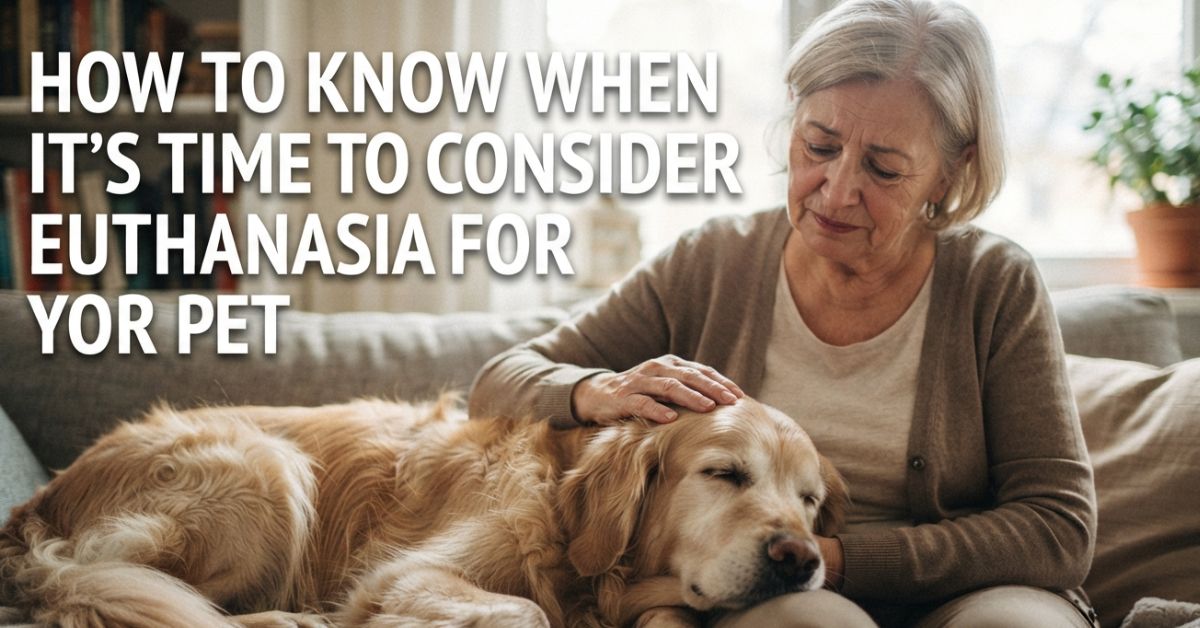
Watching a pet become seriously ill can leave an owner facing a painful question. Is there still a way to keep them comfortable, or has their quality of life changed too much? When to euthanize a pet is not determined by one symptom alone.
Age, diagnosis, and treatment history all matter, but your pet’s daily comfort matters most. Look at eating, movement, pain, behavior, and interest in familiar activities. These changes can show how your pet is coping and help your veterinarian explain what options may still be available.
Look at Your Pet’s Quality of Life

A serious illness does not always mean a pet has reached the end of life. Some animals continue to enjoy food, attention, short walks, and time with their families even while managing a chronic condition.
Pay attention to the things your pet normally enjoys. Can they rest comfortably? Are they eating and drinking? Can they get around without severe difficulty? Do they still respond to you? These everyday details can help answer when to euthanize a pet more clearly than age or diagnosis alone.
Changes That Should Not Be Ignored
Some problems appear gradually, while others can develop quickly. Recognizing signs it’s time for pet euthanasia does not mean making an immediate decision. It means knowing when your pet needs a closer veterinary assessment.
Loss of Appetite
A pet that repeatedly refuses food or water may be experiencing pain, nausea, weakness, or another health problem. Persistent changes should be discussed with a veterinarian.
Trouble Moving
Difficulty standing, walking, climbing stairs, or reaching food and water can reduce independence. Falls or an inability to move without assistance can also affect comfort.
Ongoing Pain
Hiding, restlessness, unusual vocalization, changes in posture, or avoiding touch may indicate pain. If medication no longer seems to provide enough relief, contact your veterinarian.
Breathing Problems
Difficulty breathing, persistent coughing, and evident distress while at rest should all warrant an immediate visit to the veterinarian. Respiratory problems can become life-threatening situations.
Loss of Interest
When your animal companion is no longer interested in food, toys, walks, socializing, or any previously enjoyable activities, there may be serious health concerns.
These are important pet health warning signs, but one symptom alone does not determine whether euthanasia is appropriate.
Track Good Days and Difficult Days
A gradual decline can be difficult to notice when you see your pet every day. Keeping a simple record can make changes easier to recognize.
Write down whether your pet ate, drank, slept, moved around, used the bathroom, and interacted normally. Over several days, look at the pattern. Are comfortable days becoming less common?
This can help answer when it is time to put your pet down when there are still occasional good moments. One good afternoon does not necessarily outweigh weeks of discomfort. At the same time, one difficult day does not automatically mean euthanasia is needed.
When Treatment Is No Longer Enough
Sometimes treatment controls a condition without giving the pet a comfortable life. Ask your veterinarian whether current medication is still helping and whether another treatment could improve daily comfort.
Repeated procedures, hospital visits, or difficult side effects may also affect quality of life. The important question is not simply whether another treatment exists. It is whether that treatment is likely to give your pet meaningful comfort.
This is why when to euthanize a pet should be discussed with a veterinarian who understands your pet’s condition and treatment history.
Could Hospice Care Help?
Euthanasia is not the only option for a pet with a serious or terminal illness. Hospice and palliative care can focus on pain control and comfort when curing the underlying condition is no longer possible.
Home changes may be beneficial too. Providing soft bedding, non-slip floors, easy access to food and water, and a comfortable resting place may alleviate everyday stress.
Discussing humane euthanasia for pets does not mean you have to make the decision immediately. Your veterinarian can explain whether additional treatment, hospice, or comfort-focused care may still be appropriate.
Talk to Your Veterinarian
Do not wait until a crisis to discuss your concerns. Your veterinarian can assess your pet’s condition, explain the expected progression, and help you understand realistic treatment options.
Bring notes about appetite, mobility, pain, behavior, and good and bad days. Ask direct questions. Is my pet suffering? Can the pain still be controlled? Could another treatment improve their quality of life?
Your veterinarian can help you understand signs it’s time for pet euthanasia in relation to your pet’s specific health rather than relying on a general checklist.
When Euthanasia May Be the Kindest Choice

There may come a point when your pet can no longer eat, drink, breathe, move, or rest comfortably despite appropriate care. Repeated medical emergencies and a lasting loss of interest in normal life can also indicate severe decline.
If you are asking when it is time to put your pet down, consider whether your pet can still experience reasonable comfort and dignity. When suffering cannot be adequately controlled, euthanasia may be a compassionate option.
The goal is not to find a perfect day. It is to prevent unnecessary suffering and make a decision based on your pet’s needs.
What Happens During Euthanasia?
Understanding the process can make the appointment less frightening. A veterinarian will explain what will happen and may provide sedation to help your pet relax before the euthanasia medication is administered.
Depending on availability, the procedure may take place at a veterinary clinic or in your home. You can ask about aftercare options, including cremation or burial, before the appointment.
Some veterinary practices offer Euthanasia services for pets in different settings, so discussing these choices ahead of time can make the process easier.
Coping After Saying Goodbye
Losing a pet can bring sadness, guilt, relief, or several emotions at once. There is no single way to grieve. Children and other pets in the home may also react differently.
Give yourself time to adjust. Photos, paw prints, or other keepsakes can provide a way to remember your companion. If grief becomes difficult to manage, ask your veterinary team about pet-loss support.
Final Thoughts
There is no universal answer to when to euthanize a pet. The decision depends on your pet’s comfort, health, daily abilities, and response to treatment.
If your pet is experiencing persistent pain, serious mobility problems, breathing difficulties, or a lasting loss of interest in life, speak with a veterinarian. Looking at the full picture can help you decide whether continued treatment, hospice care, or euthanasia is the most appropriate path.
Allan Veterinary Clinic can help families understand their pet’s condition and discuss comfort-focused options when difficult end-of-life decisions arise.
FAQs
What are the signs it’s time for pet euthanasia?
Severe pain, breathing problems, inability to eat or drink, serious mobility issues, and a lasting loss of interest can indicate declining quality of life. A veterinarian should assess the situation.
How do I know when to euthanize a pet?
Look at your pet’s comfort, appetite, mobility, behavior, and daily enjoyment. A pattern of declining quality of life is more important than one isolated symptom.
When is it time to put your pet down?
It may be time to discuss euthanasia when suffering cannot be adequately controlled, and your pet can no longer manage basic activities comfortably.
Is humane euthanasia for pets painful?
Veterinary euthanasia is designed to minimize pain and distress. Your veterinarian can explain sedation and each step of the procedure before it begins.
Can hospice care come before euthanasia?
Yes. Hospice and palliative care may help manage symptoms and maintain comfort when a pet has a serious or terminal condition.