
Many dog owners often wonder how often dogs should go to the vet. Some people only visit when their dog is sick, while others try to follow a routine but are not sure what is right. The truth is, regular vet visits are not only for treatment. They are also important for prevention and long-term care.
A proper schedule helps detect problems early, keeps vaccinations up to date, and supports overall health. Understanding the right timing for routine vet visits for dogs can help your pet live a longer and healthier life.
Understanding Your Dog’s Vet Visit Needs
There is no single answer that fits every dog. The question of how often dogs should go to the vet depends on age, lifestyle, and health condition. Puppies need frequent care, adult dogs need consistency, and older dogs require closer monitoring.
By following a proper plan, you can build a strong routine that includes regular veterinary checkups for dogs and helps prevent serious issues.
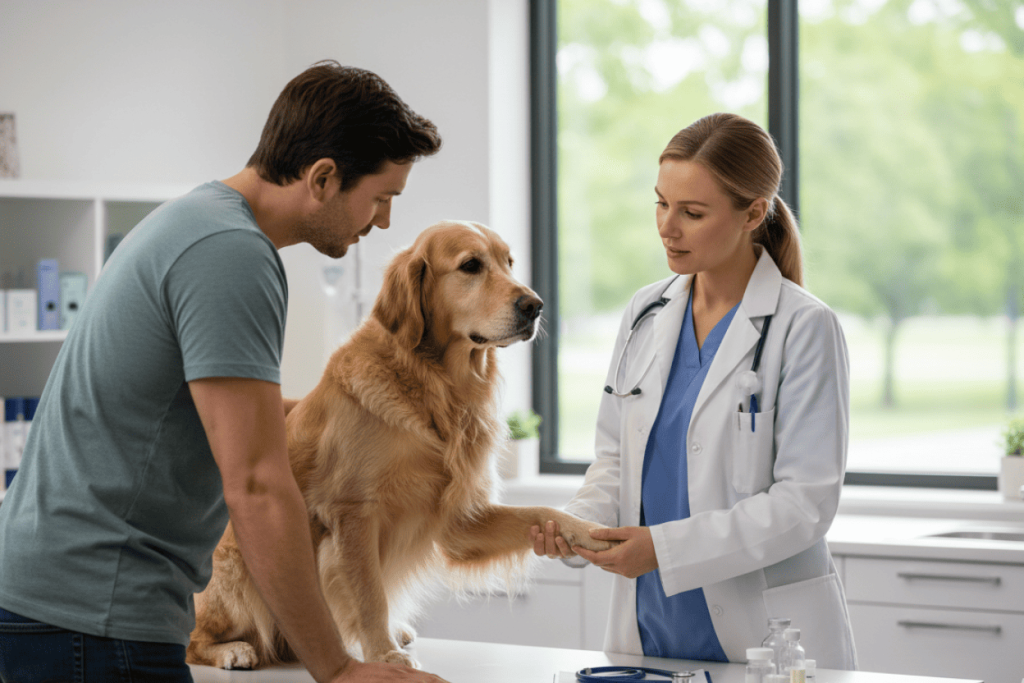
How Often Should Dogs Go to the Vet
The frequency of vet visits changes as your dog grows and their needs evolve. Some stages require closer attention, while others follow a more stable routine. Knowing what to expect at each stage makes it easier to stay consistent with care and avoid missing important checkups.
Puppies Need Frequent Vet Visits in the Beginning
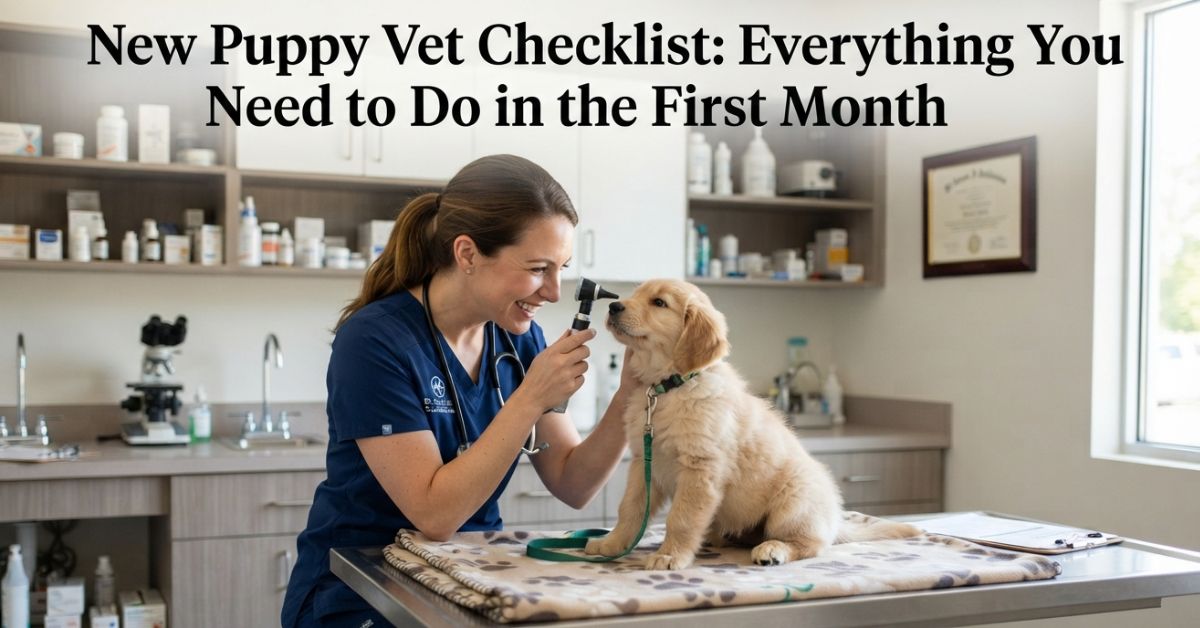
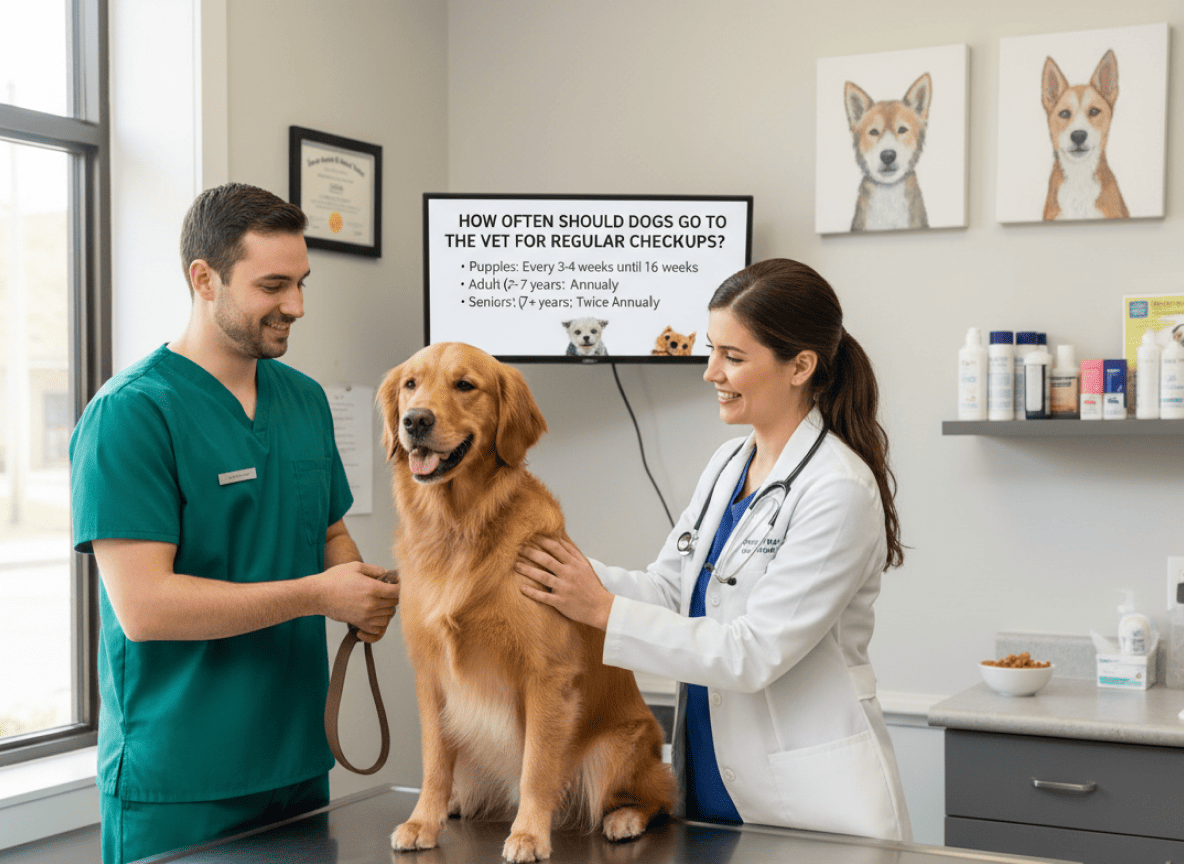
During the first few months, puppies need to visit the vet every 3 to 4 weeks. These appointments focus on vaccinations, basic health checks, and monitoring how your puppy is developing. Regular dog routine checkups at this stage help create a strong and healthy foundation.
Frequent visits also give your vet a chance to notice small issues early, like infections or dog itching, so they can be treated before they become more serious.
Young Dogs Still Require Regular Monitoring
This stage is all about guiding your dog as they grow into their personality and routine. Even though vet visits are not as frequent as before, they still matter. Your vet may suggest coming in every few months to check how your dog is growing, behaving, and adjusting during this phase.
These visits are part of routine vet visits for dogs and help keep everything moving in the right direction. They also give you space to ask questions about feeding, fix small training issues, and stay updated on preventive care as your dog becomes more active and playful.
Adult Dogs Usually Need Yearly Checkups
Once your dog reaches adulthood, things start to feel more settled and predictable. At this stage, one visit a year is usually enough to keep your dog in good shape. The adult dog vet visit schedule mainly focuses on basic health checks, vaccine updates, and preventive care.
These yearly visits also help your vet notice small differences that you might overlook at home. Dealing with these early makes it easier to avoid bigger health concerns and keeps your dog feeling their best.
After Illness or Surgery, Visits Increase
When your dog is getting over an illness or surgery, a few extra visits are needed to make sure everything is going well. These follow-ups help your vet check progress and make changes if something is not healing as expected.
During this time, it is helpful to keep a pet first aid kit at home so you can deal with small issues right away while your dog slowly gets back to normal.
Active or Outdoor Dogs May Need More Visits
Dogs that spend a lot of time outside tend to come across more risks like parasites, infections, or small injuries. Because of this, they may need to go in for checkups more often than indoor dogs.
In such cases, your vet may adjust the dog’s routine checkup plan to give your dog extra protection. Regular visits help you stay on top of things and avoid bigger health problems later.
Senior Dogs Should Visit the Vet Twice a Year
As dogs get older, their bodies start to slow down and need more attention. Visiting the vet every six months helps keep an eye on weight, joints, and overall health.
If you are wondering how often dogs should go to the vet at this stage, more frequent visits really help. These checkups make it easier to catch issues early and keep your dog comfortable and well cared for.
Dogs With Health Conditions Need More Frequent Care
Dogs dealing with ongoing medical conditions need closer supervision and more regular appointments. The frequency of visits usually depends on the type and severity of the condition.
Consistent veterinary checkups for dogs with chronic issues help control symptoms and avoid complications. With proper monitoring, your dog can stay stable and maintain a better quality of life.
Sudden Changes Mean You Should Visit Immediately
You should not always wait for a scheduled appointment if something seems wrong. Sudden changes in your dog’s behavior or health may require immediate attention from a vet.
Watch for pet health warning signs such as loss of appetite, vomiting, unusual behavior, or low energy. Acting quickly can make a big difference in preventing serious health problems and keeping your dog safe.
Creating a Simple Checkup Routine
- Follow a basic schedule based on your dog’s age and health needs
- Plan vet visits in advance to avoid missing important checkups
- Keep track of vaccinations and routine health updates
- Stay consistent instead of waiting for problems to appear
- Pay attention to small changes in your dog’s behavior or health
- A regular routine helps keep your dog healthy, active, and well cared for
The Bottom Line
Do you wait until your dog shows signs of discomfort, or do you already follow a regular care plan? Having a simple routine can make pet care feel much more manageable. When you know how often dogs should go to the vet, it becomes easier to stay organized and make confident decisions.
Regular vet visits for dogs support early care and help keep your pet in good condition. With a steady routine and a little awareness, your dog can stay comfortable, active, and happy while avoiding many common health concerns.
FAQs
What is the ideal adult dog vet visit schedule?
A healthy adult dog should have a checkup once a year. This helps maintain overall health and catch any early signs of illness.
Why are routine vet visits for dogs important?
Routine vet visits for dogs help prevent diseases, keep vaccinations updated, and detect health problems early before they become serious.
What happens during a dog routine checkup?
A dog routine checkup usually includes a physical exam, weight check, dental review, and updates on vaccinations or parasite prevention.
When should I take my dog to the vet outside regular visits?
You should visit the vet immediately if you notice health warning signs like vomiting, loss of appetite, low energy, or unusual behavior.